
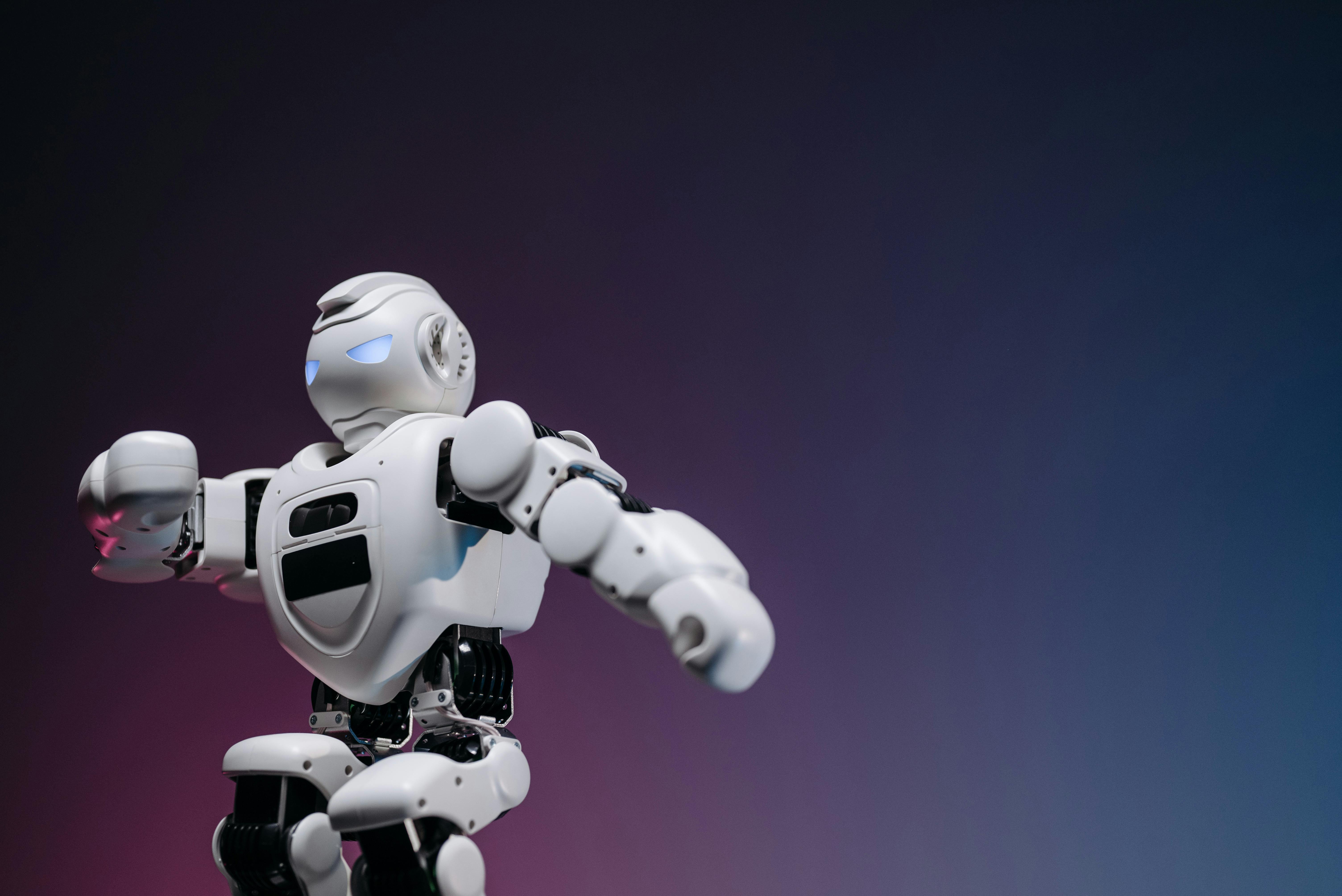
Visual-Language-Action (VLA): Bridging the Gap Between AI and Physical Reality
In the rapidly evolving landscape of artificial intelligence, one of the most significant breakthroughs has been the development of Visual-Language-Action (VLA) models. This revolutionary framework represents a quantum leap in how machines interact with our physical world, transforming abstract digital intelligence into tangible physical actions.
What is Visual-Language-Action?
Visual-Language-Action is an integrated AI framework that combines three critical capabilities:
- Visual perception: The ability to interpret and understand visual data from cameras and sensors
- Language understanding: Processing and comprehending human language instructions
- Physical action: Translating understanding into precise, real-world movements and manipulations
This triad of capabilities creates a seamless pipeline from human intention to robotic execution, effectively closing the loop between digital intelligence and physical reality.
The Technical Architecture Behind VLA
Multimodal Fusion
At the core of VLA systems lies multimodal fusion technology. These models integrate:
- Computer vision networks that process visual inputs
- Natural language processing models that interpret text and speech
- Motor control systems that plan and execute physical actions
The fusion occurs through sophisticated attention mechanisms that align visual features with linguistic concepts and action representations.
Transformer-Based Architecture
Most modern VLA systems leverage transformer architectures, similar to those used in large language models. However, they incorporate specialized adaptations:
- Vision transformers for processing spatial information
- Cross-modal attention layers that bridge visual and linguistic domains
- Action prediction heads that output motor commands
Real-World Applications Transforming Industries
Manufacturing and Logistics
VLA-powered robots are revolutionizing assembly lines and warehouses. They can:
- Understand verbal instructions like “pick up the red component and place it in box B”
- Adapt to changing visual environments and object arrangements
- Handle complex manipulation tasks with human-like flexibility
Healthcare and Assistance
In healthcare settings, VLA systems enable:
- Surgical assistants that respond to verbal commands while interpreting visual feedback
- Elder care robots that understand requests and navigate home environments
- Rehabilitation devices that adapt to patient movements and verbal feedback
Domestic and Service Robotics
Home robots powered by VLA technology can:
- Respond to commands like “clean the kitchen counter” while identifying surfaces and objects
- Navigate complex home environments using visual cues
- Learn from visual demonstrations and verbal instructions
The Technical Challenges Overcome
Developing effective VLA systems required solving several complex problems:
Perception-Action Gap
Bridging the gap between what a robot sees and how it should act required developing novel representation learning techniques that map visual features to actionable concepts.
Real-Time Processing
VLA systems must process visual and linguistic information rapidly enough to enable responsive physical actions, often requiring optimized neural architectures and specialized hardware.
Safety and Reliability
Ensuring that VLA systems act safely in unpredictable environments demanded robust uncertainty quantification and fail-safe mechanisms.
The Future of VLA Technology
As VLA systems continue to evolve, we can expect:
- Enhanced generalization: Systems that can adapt to entirely new environments and tasks
- Improved human-robot collaboration: More natural and intuitive interaction patterns
- Broader accessibility: Lower-cost implementations for widespread adoption
- Ethical frameworks: Developed alongside technical advancements to ensure responsible deployment
Conclusion: The Dawn of Truly Intelligent Automation
Visual-Language-Action models represent more than just a technical achievement—they signify a fundamental shift in how machines interact with our world. By seamlessly integrating vision, language, and action, VLA systems are unlocking new possibilities for automation that were previously confined to science fiction.
As these technologies mature, they promise to transform industries, enhance human capabilities, and create new paradigms for human-machine collaboration. The bridge between AI and physical reality, once a distant dream, is now being built through the remarkable capabilities of Visual-Language-Action systems.
Disclosure: We earn commissions if you purchase through our links. We only recommend tools tested in our AI workflows.
For recommended tools, see Recommended tool
0 Comments