
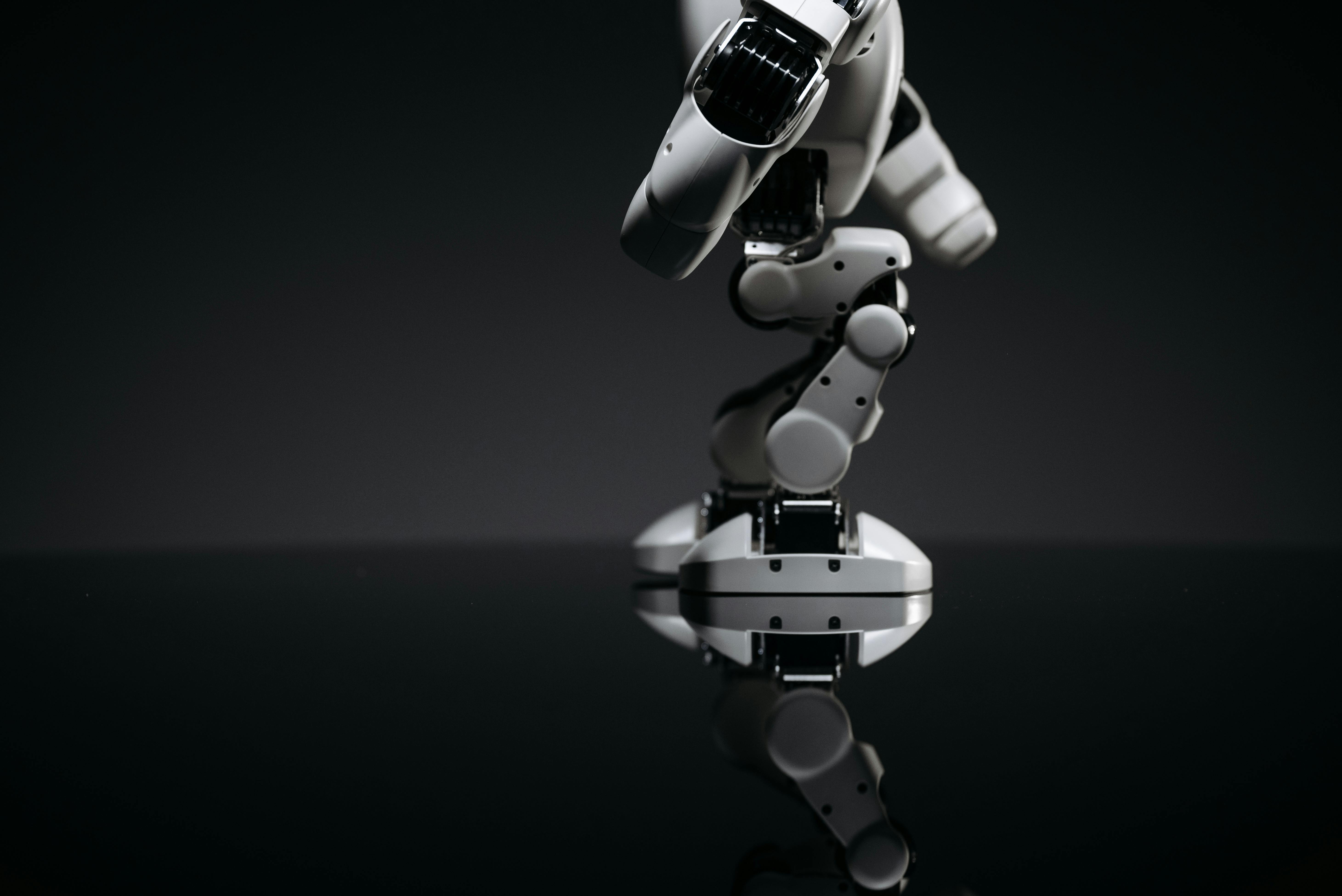
Cockpit Agent Engineering Research Report 2025: Navigating the Digital AI to Physical AI Transition
The landscape of Artificial Intelligence is undergoing a profound transformation, moving beyond the confines of purely digital environments into the tangible world of physical interaction. A groundbreaking new study, the “Cockpit Agent Engineering Research Report 2025,” meticulously dissects this pivotal evolution, offering a comprehensive analysis of the shift from digital AI systems to robust physical AI implementations. This report serves as an indispensable guide for engineers, researchers, and policymakers grappling with the complexities and immense potential of integrating artificial intelligence with real-world infrastructure, particularly within the burgeoning fields of autonomous systems and advanced robotics. It illuminates the critical engineering challenges that must be overcome and celebrates the recent breakthroughs that are making this ambitious transition a reality.
For years, AI has excelled in the digital realm. From sophisticated search algorithms and recommendation engines that personalize our online experience to powerful natural language processing tools and highly accurate image recognition systems, digital AI has revolutionized how we interact with information and software. These systems thrive on vast datasets, processing information at speeds unimaginable to humans, and extracting insights that drive countless digital services. They operate predominantly within virtual boundaries, manipulating data, generating content, and optimizing processes without direct physical interaction. However, their primary interaction remains within the digital sphere – a world of bits and bytes, not atoms and matter. The next frontier, and arguably the most challenging and impactful, is bridging this gap: enabling AI to perceive, reason, and act effectively within our dynamic, unpredictable physical world.
The Imperative Shift: From Digital to Physical AI – A New Era of Autonomy
The transition to physical AI isn’t merely an incremental improvement; it represents a paradigm shift, signaling a new era of autonomy and intelligent interaction with our environment. It’s about AI not just understanding a picture of a car or predicting traffic patterns, but driving one safely through rush-hour traffic. It’s about AI not just optimizing a manufacturing process on a screen, but commanding sophisticated robotic arms on an assembly line with precision and adaptability. This evolution is critical for unlocking the full potential of AI, moving it from a powerful tool for data processing and virtual assistance to an indispensable partner in solving some of humanity’s most pressing real-world problems – from enhancing industrial automation, logistics, and infrastructure management to enabling truly autonomous vehicles, advanced medical robotics, and sophisticated exploration platforms.
The “Cockpit Agent” in the report’s title serves as a powerful metaphor for this transition and the complex demands it places on AI systems. Imagine an AI system not confined to a server rack in a data center, but intimately embedded within a physical entity, like the “cockpit” of an autonomous vehicle, a sophisticated industrial robot, a delivery drone, or even a wearable medical device. This agent must not only process vast streams of data but also interpret ambiguous sensory inputs from its physical surroundings, make real-time, safety-critical decisions, and execute precise physical actions seamlessly and reliably. This requires a fundamentally different approach to engineering AI, one that accounts for the inherent uncertainties, variabilities, and dynamic nature of the physical world, where every decision has tangible, immediate consequences.
Key Engineering Challenges in Physical AI Integration: Bridging the Reality Gap
The journey from digital to physical AI is fraught with significant engineering hurdles, often referred to as the “reality gap.” The “Cockpit Agent Engineering Research Report 2025” meticulously details these challenges, offering profound insights into how leading researchers and industrial innovators are addressing them:
- Sensor Fusion and Robust Perception: Physical AI systems rely heavily on an array of sensors – high-resolution cameras, precise LiDAR units, robust radar, ultrasonic sensors, inertial measurement units (IMUs), and more – to build a comprehensive and accurate understanding of their environment. Integrating heterogeneous data from these diverse sources, often with varying fidelities, noise levels, and latencies, into a coherent, real-time perception model is a monumental task. The challenge extends to robust object detection, classification, tracking, and understanding complex dynamic scenarios (e.g., differentiating between a stationary object and a moving pedestrian) under diverse and often adverse environmental conditions (e.g., heavy rain, dense fog, direct sunlight, shadows, nighttime operation).
- Real-time Decision Making and Control with Guaranteed Safety: Unlike many digital AI applications that can operate asynchronously or with permissible delays, physical AI demands instant, deterministic responses. Autonomous systems must perceive, process, and make decisions, and then execute precise physical actions within milliseconds to ensure safety and effectiveness. This requires highly optimized algorithms, specialized low-latency hardware (e.g., edge AI processors, FPGAs), and robust control systems that can translate abstract AI decisions (e.g., “avoid collision”) into precise physical movements (e.g., braking, steering, joint actuation) while adhering to strict safety constraints and physical laws.
- Ensuring Safety, Reliability, and Robustness in Unpredictable Environments: The stakes are significantly higher in physical AI. A malfunction in a digital system might cause inconvenience or financial loss; a failure in a physical AI system, such as an autonomous vehicle or a surgical robot, could have catastrophic, life-threatening consequences. Ensuring verifiable safety, unparalleled reliability, and robust operation in unpredictable real-world scenarios – where unexpected events (e.g., a sudden obstacle, sensor malfunction, communication loss) are inevitable – is paramount. This involves rigorous simulation-based and real-world testing, formal verification methods, redundant systems, and the development of sophisticated fail-safe and fallback mechanisms.
- Energy Efficiency and Computational Constraints for Edge Deployment: Physical AI systems, especially mobile robots, drones, and wearable devices, often operate with severely limited power budgets and computational resources. Running complex AI models (like large deep neural networks) on these edge devices without constant access to powerful cloud infrastructure requires significant innovation in hardware and software. Research focuses on lightweight model architectures, efficient inference techniques, model compression, and the development of energy-efficient AI accelerators.
- Seamless Human-AI Interaction and Collaborative Robotics: As physical AI agents become more prevalent, the interface and collaboration between humans and these autonomous systems become increasingly crucial. This includes designing intuitive control interfaces, establishing clear and unambiguous communication protocols (both verbal and non-verbal), and enabling AI to understand and respond safely and effectively to human intent, commands, and emotions. In collaborative robotics (cobots), ensuring safe and efficient co-existence and task sharing in dynamic human workspaces is a complex challenge requiring sophisticated proxemics, gesture recognition, and predictive human behavior modeling.
- Ethical, Legal, and Societal Implications: The widespread deployment of physical AI raises profound ethical, legal, and societal questions. Who is accountable when an autonomous system makes an error or causes harm? How do we ensure fairness, prevent algorithmic bias, and maintain privacy in physical AI systems that collect vast amounts of real-world data? The report emphasizes the critical need for a holistic approach that considers not just technical feasibility but also societal acceptance, regulatory frameworks, and responsible, human-centric deployment of these powerful technologies.
Breakthroughs Paving the Way: Innovations Driving the Transition
Despite these daunting challenges, the report highlights several transformative engineering breakthroughs that are accelerating the transition to robust physical AI:
- Advances in Multi-Modal Sensor Technology: Continuous innovation in sensor design has led to miniaturization, increased accuracy, higher resolution, and reduced cost of crucial sensors (e.g., solid-state LiDAR, event cameras, millimeter-wave radar). The development of sophisticated sensor fusion algorithms allows AI systems to integrate data from disparate modalities more effectively, creating a richer, more reliable understanding of the environment, even in challenging conditions.
- Edge AI Computing and Neuromorphic Hardware: The rapid development of specialized AI chips, Tensor Processing Units (TPUs), and neuromorphic architectures designed for efficient, low-power inference at the edge is enabling complex AI models to run directly on devices with limited power and size constraints. This reduces latency, enhances privacy, and minimizes reliance on cloud processing, which is critical for real-time physical AI applications.
- Reinforcement Learning and High-Fidelity Simulation Environments: Breakthroughs in reinforcement learning (RL), coupled with the creation of highly realistic and scalable simulation environments, are revolutionizing how AI agents learn. These environments allow AI to learn complex behaviors and strategies through trial and error in virtual worlds, generating vast amounts of training data and significantly reducing training time and the risks associated with real-world learning. Sim-to-real transfer techniques are also improving, allowing knowledge gained in simulation to be effectively applied in physical systems.
- Explainable AI (XAI) and Certifiable AI for Physical Systems: Efforts to make AI decisions more transparent, interpretable, and understandable are crucial for building trust, enabling debugging, and facilitating regulatory approval in safety-critical physical AI applications. New XAI techniques are being developed that can provide insights into why an autonomous system took a particular action, moving beyond “black box” models. Concurrently, research into certifiable AI aims to mathematically prove the safety and reliability of AI components, especially vital for autonomous operations.
- Hybrid AI Architectures and Robust Control Theory: The integration of classical control theory (which provides guarantees of stability and safety) with modern, data-driven AI techniques (which offer adaptability and learning capabilities) is creating more robust and predictable physical AI systems. These hybrid approaches combine the strengths of both paradigms, leading to enhanced performance, better handling of unexpected situations, and improved safety assurances for complex physical interactions.
Applications and the Future Impact: Reshaping Our World
The implications of this profound transition are vast and are poised to reshape numerous industries and aspects of daily life. The “Cockpit Agent Engineering Research Report 2025” forecasts significant advancements and transformative impacts in:
- Autonomous Vehicles and Smart Logistics: Beyond self-driving cars, the report anticipates widespread deployment of autonomous trucks, delivery robots, and drone systems that will revolutionize transportation networks, supply chains, and urban mobility, promising greater efficiency, reduced accidents, and new service models.
- Advanced Robotics for Industry and Service: Robots capable of highly dexterous manipulation, intelligent navigation in unstructured environments, and seamless human-robot collaboration will become increasingly commonplace. This will extend beyond traditional manufacturing to areas like healthcare (surgical robots, patient care assistants), agriculture (precision farming robots), infrastructure inspection, and personalized service industries.
- Intelligent Infrastructure and Smart Cities: AI-powered systems embedded within urban infrastructure will manage complex traffic flow in real-time, optimize energy consumption across grids, monitor the health of bridges and buildings, enhance public safety through intelligent surveillance, and improve waste management, creating more sustainable and responsive urban environments.
- Exploration in Remote and Hazardous Environments: Autonomous robots and drones will perform critical tasks in environments too dangerous, remote, or inaccessible for humans, including deep-sea exploration, planetary missions, disaster response zones, and nuclear facility maintenance, pushing the boundaries of scientific discovery and human safety.
The report underscores that the “cockpit agent” of the future won’t just be an intelligent interface or a sophisticated software program; it will be the very intelligence that animates and guides physical systems through the complexities and uncertainties of the real world. This necessitates a new breed of engineers – those who possess a deep, interdisciplinary understanding of both advanced AI algorithms and the fundamental physics of the real world, capable of designing systems that are not only intelligent and efficient but also inherently safe, robust, ethical, and trustworthy.
Conclusion: Charting the Course for Physical AI
The “Cockpit Agent Engineering Research Report 2025: Digital AI to Physical AI Transition” provides a critical roadmap for understanding and navigating one of the most exciting and challenging frontiers in artificial intelligence. It highlights that while digital AI has transformed our information age, physical AI is poised to redefine our physical reality, bringing intelligence directly into our environments and tools. The engineering breakthroughs discussed in the report are not just theoretical concepts; they are the bedrock upon which the next generation of autonomous systems and intelligent robots will be built. As AI continues its journey from the digital screen to the tangible world, the insights from this comprehensive report will be invaluable in shaping a future where AI empowers us to interact with and transform our physical environment in unprecedented ways, making our world safer, more efficient, more productive, and profoundly more intelligent.
Disclosure: We earn commissions if you purchase through our links. We only recommend tools tested in our AI workflows.
For recommended tools, see Recommended tool
0 Comments